About
I am a full professor of computational linguistics at the University of Tübingen, and DECRA fellow at the University of Melbourne.
My research focusses on understanding how humans learn about and represent complex and evolving information in the context of large-scale and noisy environments; and on using these insights to develop fairer and more robust automatic systems. I combine methods from natural language processing, machine learning and computational cognitive modelling. Representative projects include scalable models of
Before joining the University of Tübingen, I spent 7 years at the University of Melbourne. Before that, I was a postdoc / applied scientist at Amazon Core AI in Berlin, and before that a research associate in the Edinburgh NLP group , ILCC, University of Edinburgh, working with Mirella Lapata and Shay Cohen.
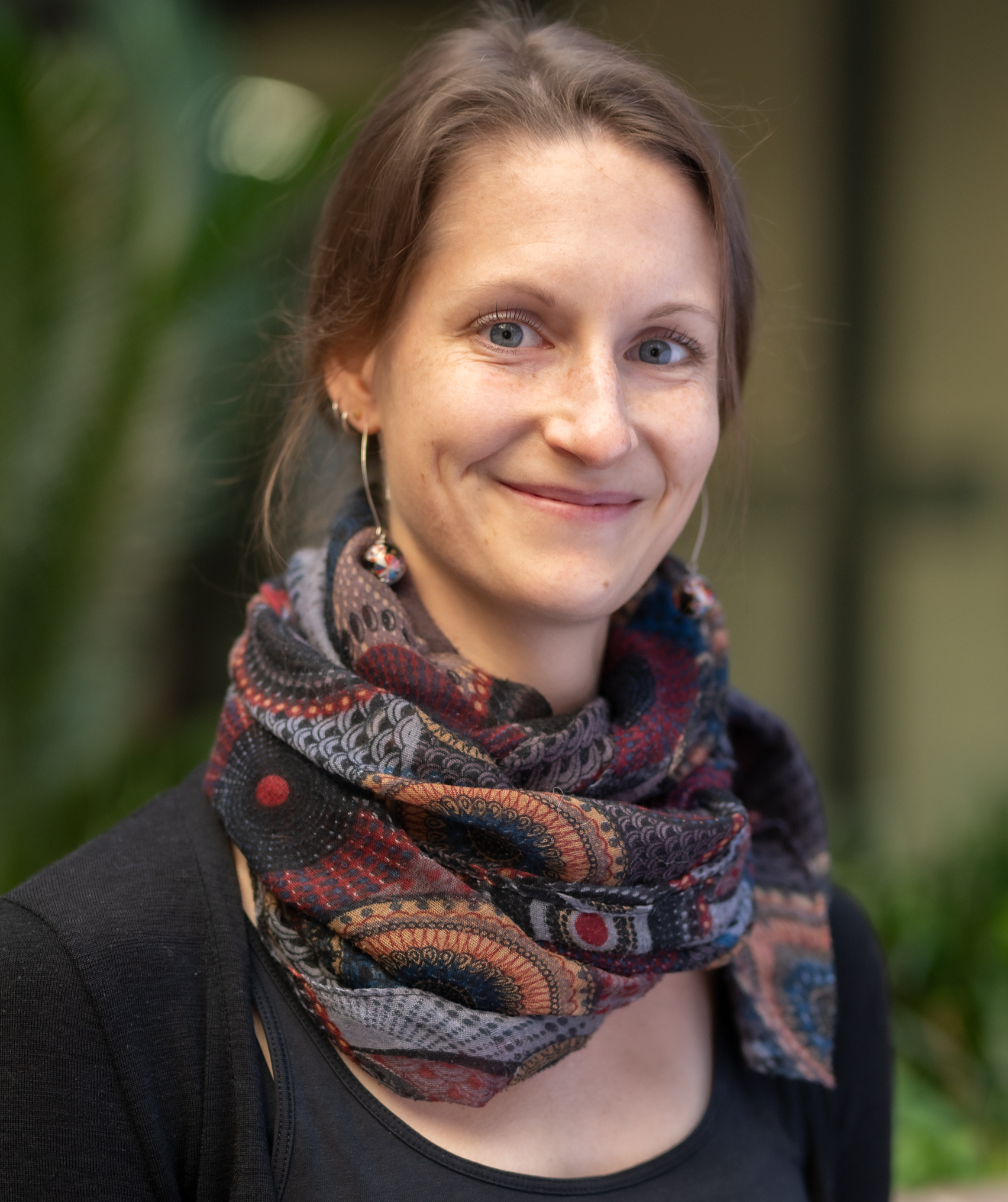
Contact Details
Lea FrermannKeplerstraße 2 / Room 157
72074 Tübingen
Phone: +49 7071 2978490
Email: lea.{my_lastname}@uni-tuebingen.de
Mini Bio
| 2026 - | Full Professor at Universität Tübingen |
| 2023 - | Senior Lecturer at Melbourne University (now part-time) |
| 2019 - 2023 | Lecturer at Melbourne University |
| 2018 - 2019 | Postdoc at Amazon Core AI (Berlin) |
| 2017 - 2018 | Research associate at ILCC, University of Edinburgh (collaborators Mirella Lapata and Shay Cohen) |
| 2017 | Visiting scholar at Language and Cognition Lab, Stanford University (host Michael Frank) |
| 2013 - 2017 | PhD at ILCC, University of Edinburgh (supervisors Mirella Lapata and Charles Sutton) |
| 2016 | Machine Learning Internship with Amazon Berlin (3 months) |
| 2010 - 2013 | MSc in Language Science and Technology from Saarland University (supervisors Ivan Titov and Manfred Pinkal) |
| 2012 | Erasmus Mundus Research exchange to NTU Singapore. Research project with Francis Bond. |
| 2007 - 2010 | BA in Linguistics, University of Bremen, Germany. |
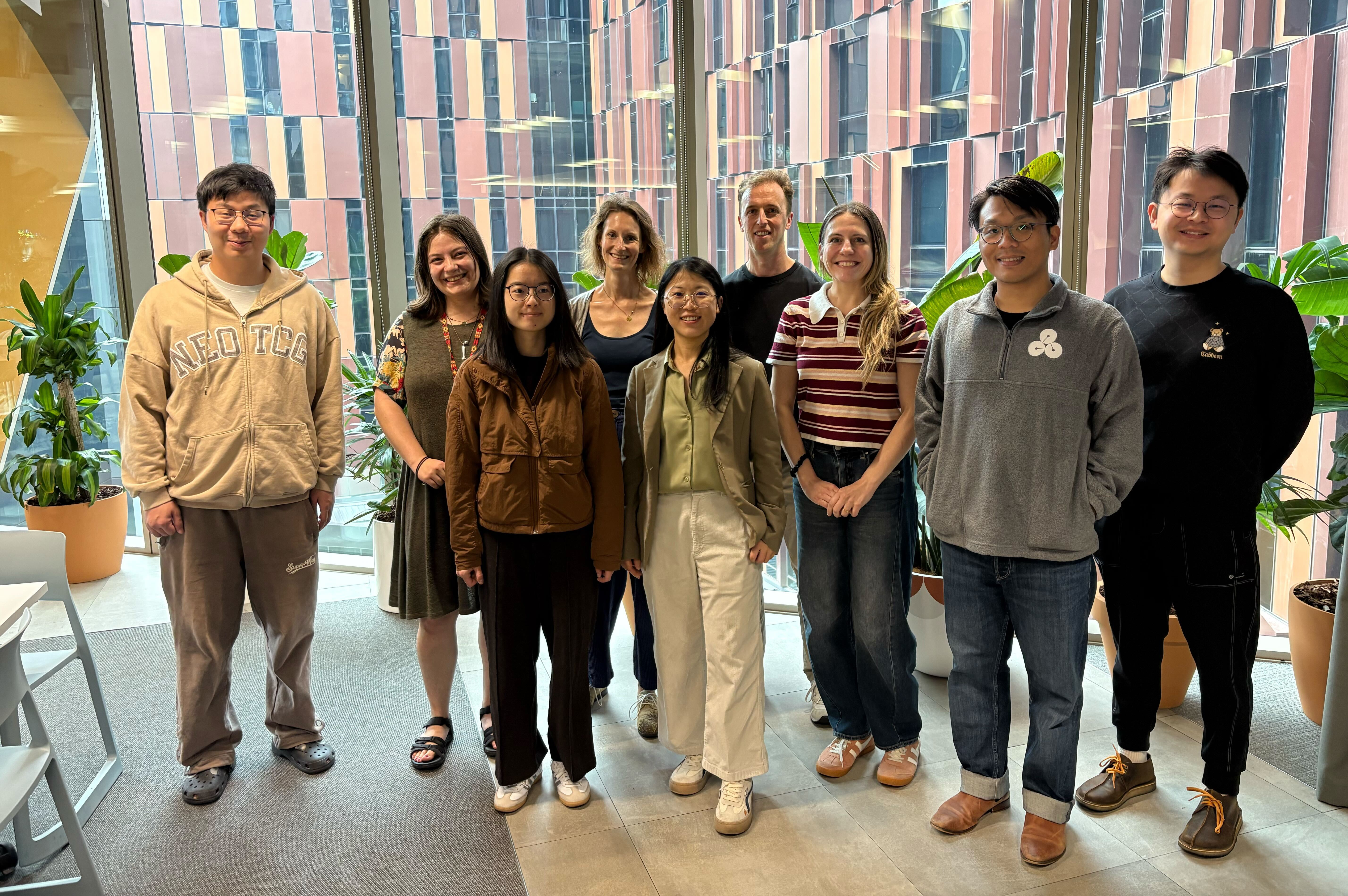
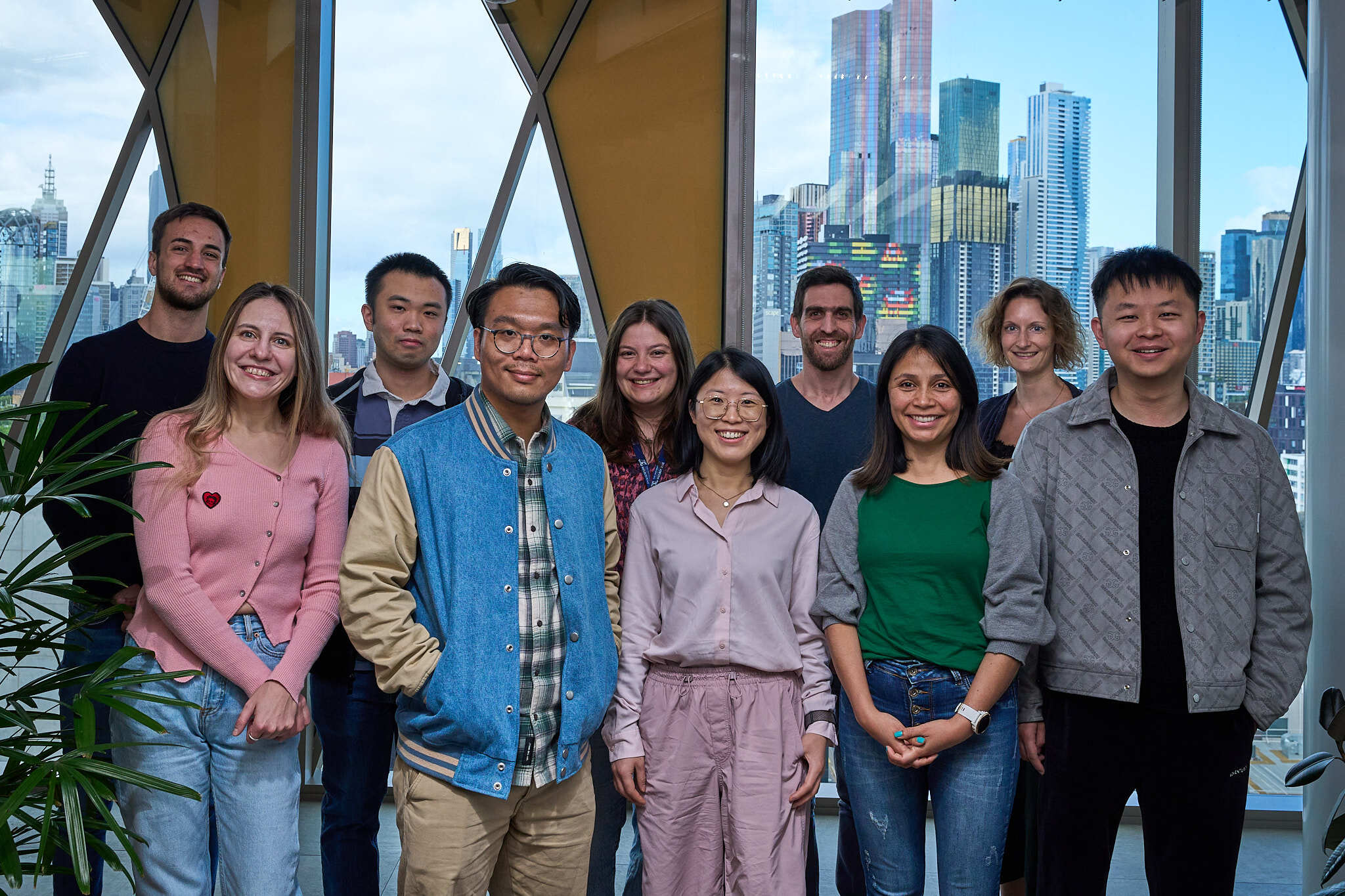
Lea's Lab
Current Tübingen
Current Melbourne
Former
Publications
Teaching
Tübingen
| WS 2026/2027 | NLP for Computational Social Science |
| WS 2026/2027 | Cross-disciplinary Perspectives on Narratives |
Melbourne
| 2025 (semester 2) | Introduction to Machine Learning (COMP90049) |
| 2024 (semester 2) | Introduction to Machine Learning (COMP90049) |
| 2023 (semester 1) | Introduction to Machine Learning (COMP90049) |
| 2022 (semester 2) | Advanced Business Analytics: Text and Web Analytics (BUSA90501) |
| 2022 (semester 1) | Introduction to Machine Learning (COMP90049) |
| 2021 (semester 1) | Introduction to Machine Learning (COMP90049) |
| 2020 (semester 1) | Introduction to Machine Learning (COMP90049) |
| 2019 (semester 2) | Knowledge Technologies (COMP90049) |
Invited Talks and Presentations
| 07 / 2025 | B-IT, University of Bonn, Germany
|
| 07 / 2024 | ML/NLP Seminar, Heidelberg University, Germany
|
| 04 / 2024 | ML/NLP Seminar, Macquairie University, Sydney, AU
|
| 04 / 2024 | ML/NLP Seminar, University of Sydney, AU
|
| 08 / 2023 | ML/NLP Seminar, Potsdam University, Germany
|
| 07 / 2023 | NLP Seminar, Ludwig Maximilian University, Munic, Germany
|
| 06 / 2023 | NLP Seminar, UC Louvain, Belgium
|
| 05 / 2023 | Complex Human Data Hub Seminar series, University of Melbourne
|
| 03 / 2023 | Department of Economics, University of Melbourne
|
| 02 / 2023 | NLP seminar, University of Toronto
|
| 12 / 2022 | The Hebrew University Jerusalem
Models of Narratives and Framing |
| 10 / 2021 | Victorian GPGPU Research Symposium
GPU-powered Natural Language Processing: Opportunities and Challenges in Academic Research |
| 11 / 2020 | ML Seminar, Monash University.
Improving Narrative Understanding with Inductive Biases |
| 09 / 2020 | CIS Seminar Series, Melbourne University, Melbourne, Australia.
Improving Narrative Understanding with Inductive Biases |
| 01 / 2020 | Monash Neuroscience of Consciousness Lab, Monash University, Melbourne, Australia.
Scaling Concept Learning and Story Understanding Through Natural Language Processing |
| 11 / 2019 | Complex Human Data Hub, Melbourne University, Melbourne, Australia.
Towards Conceptual Story Understanding |
| 04 / 2019 | Data Science Seminar, Columbia University, New York, USA.
Learning representations of long narratives for summarization and inference |
| 04 / 2019 | University of Toronto, Toronto, Canada.
Modeling Dynamics in Language, Learning and Inference |
| 04 / 2019 | Johns Hopkins University, Baltimore, USA.
Learning representations of long narratives for summarization and inference |
| 07 / 2018 | University of Melbourne, Melbourne, VIC.
From word learners to crime detectives: bridging the gap between human and machine learning |
| 04 / 2018 | University of Washington, Seattle, USA.
Title: Whodunnit? Crime Drama as a Case for Natural Language Understanding |
| 02 / 2018 | Univeristät Stuttgart, IMS, Stuttgart, Germany.
Title: Modelling the Dynamics of fine-grained Change in Word Meaning over Centuries |
| 10 / 2017 | Saarland University, Saarbruecken, Germany.
Title: Whodunnit? Crime Drama as a Case for Natural Language Understanding |
| 10 / 2017 | Alan Turing Institute, London, UK.
Title: Structured dynamic models of meaning for understanding language change and representing book plots |
| 09 / 2017 | CoAStaL Copenhagen Natural Language Processing Group, Copenhagen, Denmark.
Title: Structure and Dynamics of Meaning in Humans and in Language |
| 08 / 2017 | Stanford NLP Seminar Series, Stanford University, USA.
Title: Of Space Piracy and Secret Baby Romances: Deep Multi-View Book Representations and a Scalable Evaluation Framework |
| 11 / 2016 | Keynote talk at the Drift-a-LOD workshop (co-located with EKAW), Bologna. Title: Modelling fine-grained Change in Word Meaning over centuries from Large Collections of Unstructured Text |
| 12 / 2015 | Heriot-Watt University, Edinburgh, Scotland, UK. Title: Incremental Bayesian Learning of Semantic Categories and their Features |
| 09 / 2015 | Google NLP PhD Summit, Zürich. |
| 07 / 2012 | Invited Paper at the First Workshop on Multilingual Modeling (in conjunction with ACL 2012), Jeju, Korea. Title: Cross-lingual Parse Disambiguation based on Semantic Correspondence |